Yes, a smooth return from winter break is achievable with the right plan. The first week back requires gradual re-entry: start with community-building icebreakers (share circles, musical mingle), explicitly review procedures (practice stations, expectations refresh), use engaging academic review games (Kahoot, scavenger hunts, Jeopardy), and incorporate goal-setting (one-word themes, SMART goals, time capsules). Plan 3-5 transition days before returning to full rigor. With intentional planning, you can turn this transition into an opportunity to strengthen classroom culture and launch the second half of the year with energy and purpose.
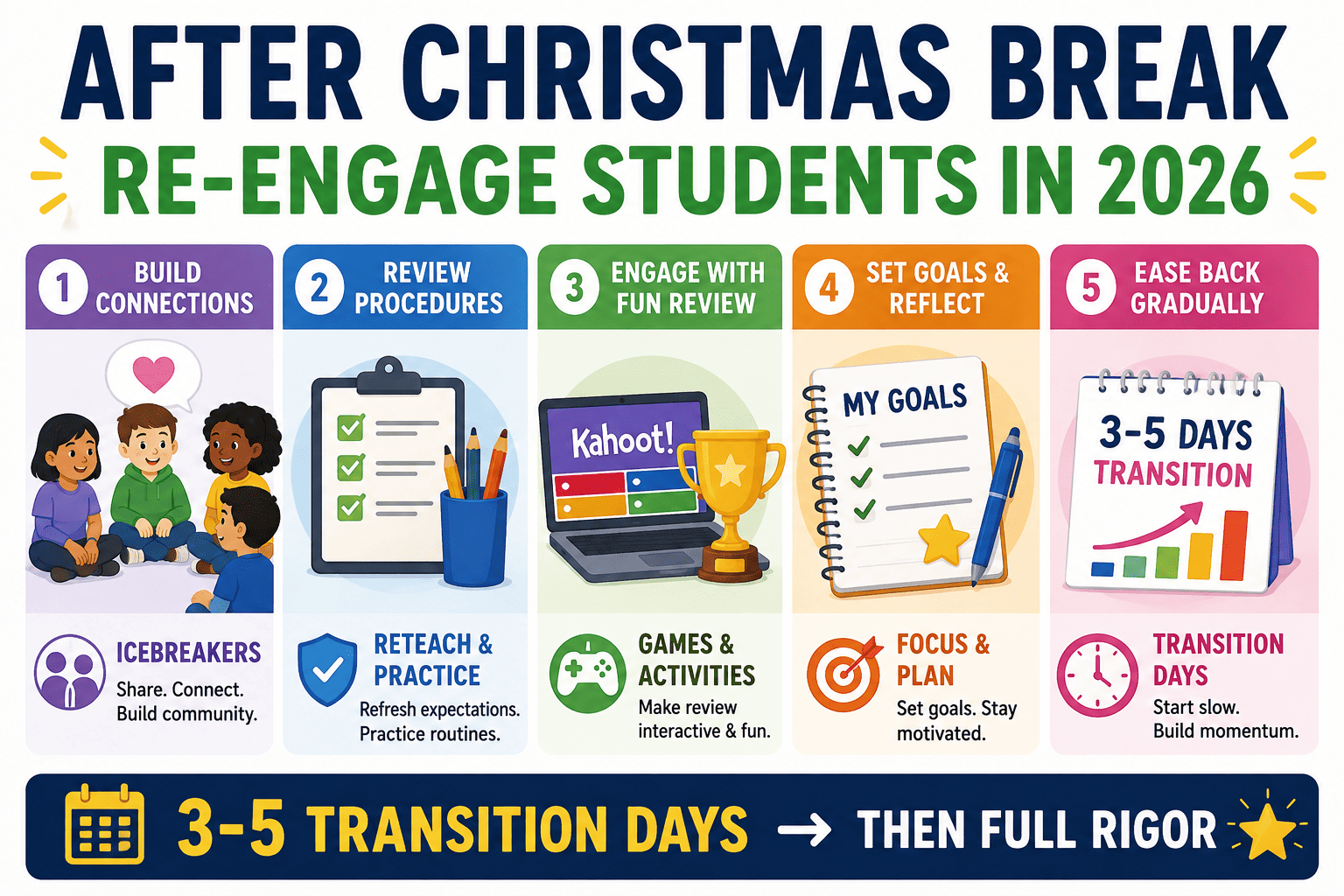
The return to school after Christmas break presents unique challenges for educators. Students arrive with minds still filled with holiday memories, sleep schedules thrown off, and academic skills that may have gone dormant for two weeks. Teachers face the daunting task of re-establishing routines, rebuilding classroom culture, and reigniting the learning momentum that was building before the break. The first week back can make or break the entire second half of the school year.
Balance, ease students back into routines while maintaining engagement and learning. Not too rigorous, not too lax. Plan 3-5 days of modified instruction with gradual progression back to full rigor.
Students return from break with a complex mix of emotions and challenges. Anxiety about academics, emotional baggage from family experiences, exhaustion from disrupted sleep schedules, forgotten procedures, and shorter attention spans all combine to make the first week back particularly challenging. Understanding these factors helps teachers approach the transition with patience and strategic planning.
Some students feel pressure returning to academics after carefree days. Others worry about catching up or facing challenging content.
Not all holidays were happy. Some students experienced family difficulties, loss, or disappointment. Approach with sensitivity.
Travel, late nights, and disrupted sleep schedules affect energy and focus. Students may struggle to maintain attention.
Two weeks erased muscle memory around classroom routines. Students need explicit re-teaching of expectations.
Approach the first week with patience, flexibility, and a commitment to rebuilding before advancing. This investment pays dividends throughout the rest of the year.
Students share one highlight from break (optional). Use a talking stick. Provides structure for excited students while respecting those who prefer not to share.
Play music while students walk. When music stops, they share with the nearest classmate. Repeat several times for multiple connections.
Creative prompts allow students to process break experiences. Offer multiple options so students can choose what resonates.
Rotate through stations practicing lining up, quiet signal, supply management, and transitions. Time students and celebrate improvement.
Interactive review, small groups create posters illustrating expectations, or class discussion about why each rule matters.
Signal a fresh start. Have students help choose elements of the arrangement to increase acceptance and ownership.
Bingo cards with prompts like “Find someone who built a snowman” or “Find someone who traveled.” Structured enough for shy students to participate.
Collaborative bulletin board where every student contributes a personal goal for the semester. Display prominently and reference throughout the year.
Quick verbal or written sharing of what students are grateful for. Research shows gratitude practices improve mental health and classroom culture.
Free online platforms turn review into exciting competition with music, timers, and leaderboards. Highly engaging for all grade levels.
Hide questions around the classroom. Students solve each problem before searching for the next. Kinesthetic and collaborative.
Team competition with categories covering previous units. Works for all ages with appropriate modifications and question difficulty.
Post answers in corners. Students move to the corner representing the correct answer. Kinesthetic, engaging, and great for discussion.
Students choose one word as their focus for the year (e.g., kindness, perseverance, reading). Create artistic representations and write about why they chose it.
Teach Specific, Measurable, Achievable, Relevant, Time-bound goals. Transform vague wishes into concrete action plans.
Create capsules with predictions, drawings, and goals to be opened at year’s end. Builds anticipation and provides motivation.
Skills stations with dice games, manipulatives, and digital math games instead of worksheets. Build confidence before returning to rigorous content.
Winter-themed creative prompts, snow day adventures, perfect hot chocolate recipes, time-travel to 1925. Lower stakes, high engagement.
Observation journals documenting winter phenomena (snowflakes, ice formation, daylight changes). Connects to real-world experiences.
Interest inventories, book talks, library visits to discover new books. Renew excitement for independent reading.
| Grade Level | Best Activities | Key Considerations |
|---|---|---|
| K-2 | Picture drawing of break memories, simple goal setting with teacher guidance, movement breaks, review basic routines | Maximum structure, shorter attention spans, frequent activity changes |
| 3-5 | Written reflections, peer sharing circles, collaborative goal setting, game-based academic review | More independence but still need clear expectations, benefit from choice |
| Middle School | Journaling, small group discussions, SMART goal workshops, competitive review games | Social connections paramount, balance structure and autonomy |
| High School | Reflective essays, current events discussions, project-based goal setting, peer teaching | Treat as young adults, allow voice and choice, focus on relevance |
Monday: Soft start with community building and sharing, procedure review, light academic review games, goal setting introduction.
Tuesday: Continue goal setting activities, reintroduce academic content through engaging formats, practice routines.
Wednesday: More rigorous content with support and engagement strategies, build momentum.
Thursday: Near normal schedule with some fun elements, formative assessments.
Friday: Celebrate successful return with fun activity, preview upcoming week.
❌ Expecting immediate December-level functioning without transition time
❌ Skipping procedure review
❌ Assigning major tests the first week back
❌ Ignoring emotional needs of students who had difficult holidays
❌ Treating the entire week as a throwaway with no learning
A successful return after break is about intention, not perfection. With thoughtful planning and the right activities, you can transform this transition into an opportunity to strengthen classroom culture, reset expectations, and launch the second half of the year with energy and purpose. Pay attention to your students’ cues and adjust accordingly.
The return from Christmas break does not have to be a painful experience filled with chaos and frustration. With thoughtful planning and the right activities, you can transform this transition into an opportunity to strengthen classroom culture, reset expectations, and launch the second half of the year with energy and purpose. Remember that every class is different, pay attention to your students’ cues and adjust accordingly. The flexibility to meet students where they are while gently moving them toward where they need to be is the hallmark of excellent teaching.
The best investment you can make in the first week back is intentional time spent rebuilding relationships and routines. Don’t rush it. A smooth transition now prevents countless problems later. You’ve got this, and your students will thank you for it.
Get printable procedure review cards, goal-setting worksheets, and game templates for the first week back.
More Teaching Resources → Free Classroom ToolsContinue building your teaching toolkit with our guides on English phonetics, types of adjectives, and adjectives to describe yourself.

Belekar Sir is the founder and lead instructor at Belekar Sir’s Academy, a trusted name in English language education. With over a decade of teaching experience, he has helped thousands of students—from beginners to advanced learners—develop fluency, confidence, and real-world communication skills. Known for his practical teaching style and deep understanding of learner needs, Belekar Sir is passionate about making English accessible and empowering for everyone. When he’s not teaching, he’s creating resources and guides to support learners on their journey to mastering spoken English.