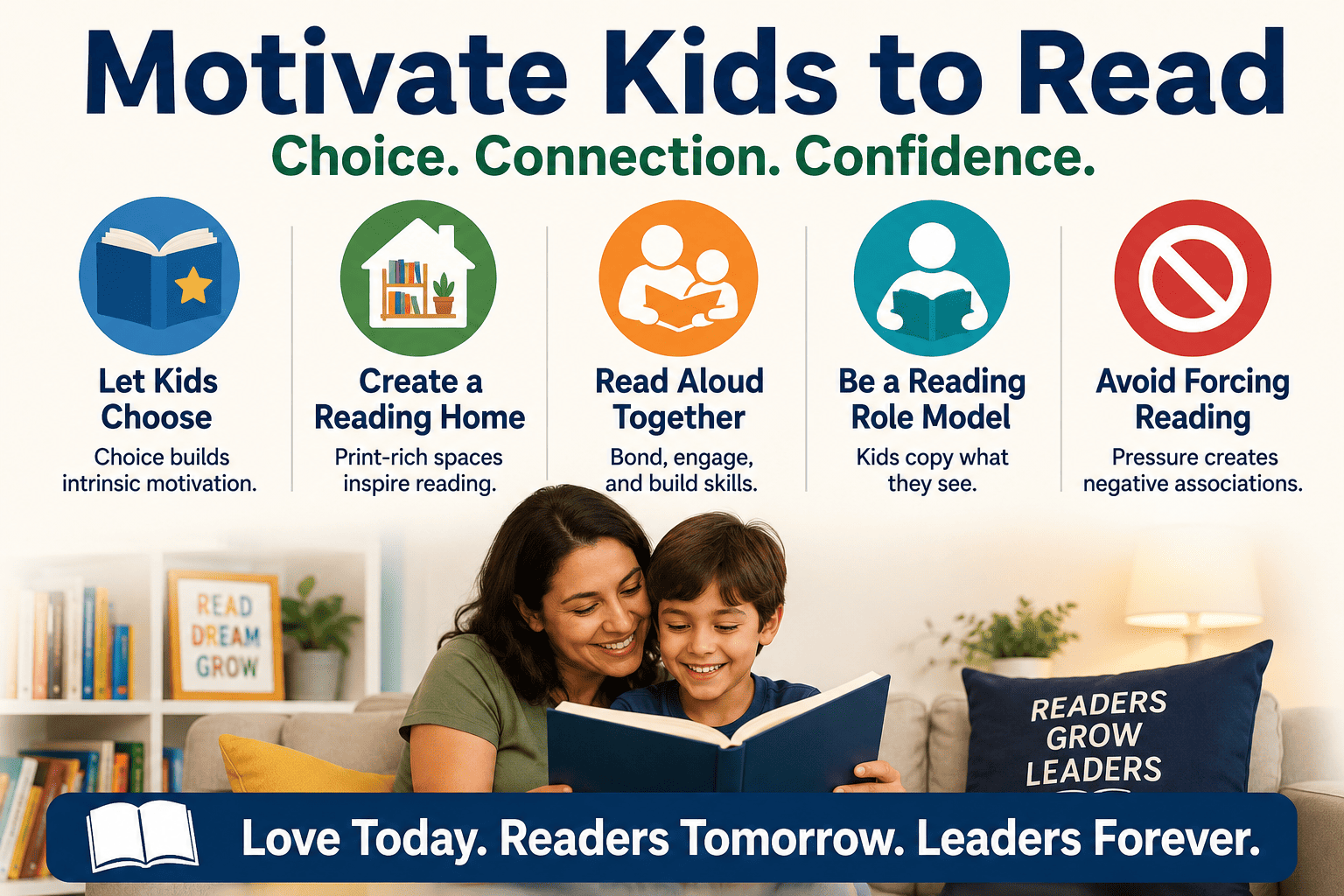
Yes, motivating kids to read requires choice, confidence, and connection. Research shows that intrinsic motivation, reading for genuine enjoyment, is far more powerful than rewards or pressure. Provide meaningful choice in book selection, create a print-rich home environment, read aloud together regardless of age, and model your own reading life. Avoid forcing reading, which creates negative associations that last for years. Motivated readers read 300 percent more than unmotivated readers.
As a parent or educator, few things are more frustrating than watching a child resist reading despite your best efforts. You buy colorful books, set aside reading time, and emphasize the importance of literacy, yet your child remains unmotivated, seeing reading as a chore rather than a pleasure. This struggle is more common than you might think, and understanding why children lose motivation to read is the first step toward solving the problem.
Research reveals a troubling trend: children typically start school enthusiastic about reading, but motivation declines steadily as they progress through grades. By middle school, many students view reading as mandatory work rather than enjoyable activity. This decline has significant consequences because motivated readers read 300 percent more than unmotivated readers, creating a widening gap in vocabulary, comprehension, and academic achievement across all subjects.
The good news is that reading motivation is highly influenceable. Research consistently demonstrates that specific strategies can transform reluctant readers into engaged book lovers. The key lies in understanding the difference between intrinsic motivation, which comes from internal satisfaction and genuine interest, and extrinsic motivation, which relies on external rewards and can actually undermine long-term reading enjoyment.
Reading motivation is the internal drive that leads children to choose reading activities and persist through challenges. It includes intrinsic motivation (reading for enjoyment, curiosity, and interest) and extrinsic motivation (reading for external rewards or to avoid punishment). Research consistently shows that intrinsic motivation produces more frequent reading, better comprehension, and greater long-term engagement than extrinsic motivation.
Before implementing strategies, understanding what drives reading motivation helps you make informed decisions about which approaches will work best for your child.
Research identifies three essential factors that determine whether children will engage with reading: interest, dedication, and confidence. These pillars work together to create a foundation for lasting reading motivation.
Children who find reading material interesting naturally read more frequently. When kids discover books about topics they love, dinosaurs, soccer, mystery, fantasy, reading transforms from obligation to pleasure. Interest is the most powerful predictor of reading volume.
Dedication reflects a child’s understanding that reading matters for school success, future careers, and daily tasks. This creates commitment even when materials aren’t inherently fascinating. Dedication sustains reading through challenging material.
Confidence means children believe they can successfully read and comprehend texts. When kids feel capable, they approach challenging books with determination. Building confidence requires appropriate text levels, specific praise, and celebrating progress.
Studies show that intrinsically motivated students read 300 percent more than students with low intrinsic motivation, creating a virtuous cycle where more reading builds stronger skills, which increases confidence and motivation further.
| Type | Source | Effectiveness | Example |
|---|---|---|---|
| Intrinsic | Internal satisfaction, curiosity, enjoyment | Long-lasting, powerful habits | Reading because a story is exciting |
| Extrinsic | External rewards, prizes, privileges | Temporary, can undermine enjoyment | Reading for candy or toys |
The danger with rewards is that children begin reading simply to earn prizes rather than for genuine interest. When rewards stop, reading often stops too. This “overjustification effect” has been documented in numerous studies across multiple decades.
As students advance through grades, reading materials become more challenging. Without adequate support, struggling readers become overwhelmed and lose motivation.
School reading assignments often remove the autonomy that fuels intrinsic motivation. When children can’t choose what they read, engagement declines significantly.
Tests, quizzes, and grades turn reading from exploration into evaluation. The pressure to perform can extinguish the natural joy of reading.
Dyslexia, ADHD, or vision problems make reading genuinely difficult. Without appropriate support, these children conclude they’re “bad at reading” and give up.
Let children choose their own books. Library trips, diverse home libraries, and respecting genre preferences dramatically increase engagement. Choice is the single most powerful motivation strategy.
Continue reading aloud even after children can read independently. Read-alouds model fluent reading, build vocabulary, create positive associations, and expose kids to books above their reading level.
Display books attractively, create cozy reading nooks, and keep reading materials accessible throughout your home. Visible books invite reading.
Include fiction, nonfiction, graphic novels, magazines, and poetry to appeal to all interests and reading levels. Variety prevents boredom and reaches different learning styles.
Let children see you reading. Talk enthusiastically about books. Your passion is contagious and demonstrates that reading is a valued adult activity.
Offer books as prizes, extra reading time, or library visits, rewards closely related to reading are most effective and least likely to undermine intrinsic motivation.
Start family book discussions, peer recommendation exchanges, or age-appropriate online reading communities. Social connection enhances engagement.
Cook from recipes, follow game instructions, read sports news, research family trips, show how reading matters in everyday life.
| Book Type | Purpose | Examples |
|---|---|---|
| Fiction | Imagination, empathy, narrative understanding | Novels, picture books, fantasy, realistic fiction |
| Nonfiction | Knowledge building, curiosity satisfaction | Biography, science, history, nature |
| Graphic Novels | Visual literacy, reluctant reader engagement | Comics, manga, illustrated stories |
| Magazines & Periodicals | Current interests, bite-sized reading | National Geographic Kids, Sports Illustrated Kids |
| Poetry & Rhymes | Language play, rhythm, memorability | Nursery rhymes, Shel Silverstein, haiku |
When teachers simply place a book upright on a table, children are significantly more likely to choose that book. Apply this principle at home by regularly highlighting specific books through strategic placement and displaying books face-out rather than spine-out.
Make reading fun and playful. Read aloud extensively, visit libraries as adventures, connect books to toys and shows, and celebrate any interest in letters or words. Focus on positive associations rather than skill mastery.
Introduce diverse genres including nonfiction and graphic novels. Provide increasing choice, connect reading to hobbies and interests, and balance independent reading with continued read-alouds that expose children to more complex texts.
Honor genre preferences even if they seem “lowbrow.” Leverage social aspects through book clubs, use technology positively through reading apps, and reduce required reading when possible to preserve intrinsic motivation.
Focus on relevance to teen lives. Provide completely autonomous choice, use shorter engaging texts for reluctant readers, and support audiobooks and flexible formats that accommodate busy schedules.
Requiring reading or imposing negative consequences creates resentment and negative associations that last for years.
Candy, toys, or money for reading treats reading as unpleasant work requiring compensation, damaging intrinsic motivation.
Telling a child they read less than siblings or classmates damages confidence and motivation significantly.
Requiring only classics or dismissing graphic novels disrespects children’s preferences and kills motivation.
Constant testing and quizzing turns reading into evaluation rather than exploration.
Many parents stop reading aloud when kids learn to read independently, missing ongoing motivation opportunities.
Children who avoid reading often face genuine difficulties requiring specialized support. Forcing struggling readers without proper support creates negative associations that destroy motivation permanently. Professional intervention addresses root causes while motivation strategies address engagement.
Motivating children to read requires understanding that genuine, lasting motivation comes from within rather than external pressure or rewards. Research consistently demonstrates that the most effective strategies honor children’s autonomy through choice, build confidence through appropriate challenges and specific feedback, connect reading to genuine interests and real-life purposes, and create positive social experiences around books.
The investment in reading motivation pays enormous dividends. Motivated readers read 300 percent more than unmotivated readers, creating exponential growth in vocabulary, knowledge, comprehension, and academic achievement across all subjects. More importantly, children who develop genuine love of reading gain a source of lifelong pleasure, learning, and personal growth that enriches their entire lives.
Start today by offering your child choice in selecting a book, reading aloud together for 15 minutes, sharing something interesting from your own reading, or simply making time to visit the library together. Small, consistent actions build the motivation that transforms reluctant readers into book lovers.
Explore more parenting and literacy resources at Belekar Sir’s Academy.
Browse All Articles → Try Our ToolsContinue exploring literacy resources with our guides on types of adjectives, adjectives to describe yourself, and adjectives for work ethic.
Every child can become a reader. With patience, choice, and your belief in them, reluctant readers become book lovers.

Belekar Sir is the founder and lead instructor at Belekar Sir’s Academy, a trusted name in English language education. With over a decade of teaching experience, he has helped thousands of students—from beginners to advanced learners—develop fluency, confidence, and real-world communication skills. Known for his practical teaching style and deep understanding of learner needs, Belekar Sir is passionate about making English accessible and empowering for everyone. When he’s not teaching, he’s creating resources and guides to support learners on their journey to mastering spoken English.