Yes, one word resolutions work beautifully for kids! Instead of overwhelming lists of goals, children select a single powerful word (like kindness, brave, growth, or focus) that becomes their guide for the entire year. This approach simplifies goal-setting, builds self-regulation, and develops identity and confidence. With just 15-20 minutes of guided reflection, most children can choose a word that truly resonates with them. This guide provides 50+ word ideas by theme, a step-by-step selection process, reinforcement activities, and age-appropriate adaptations for ages 4-12.
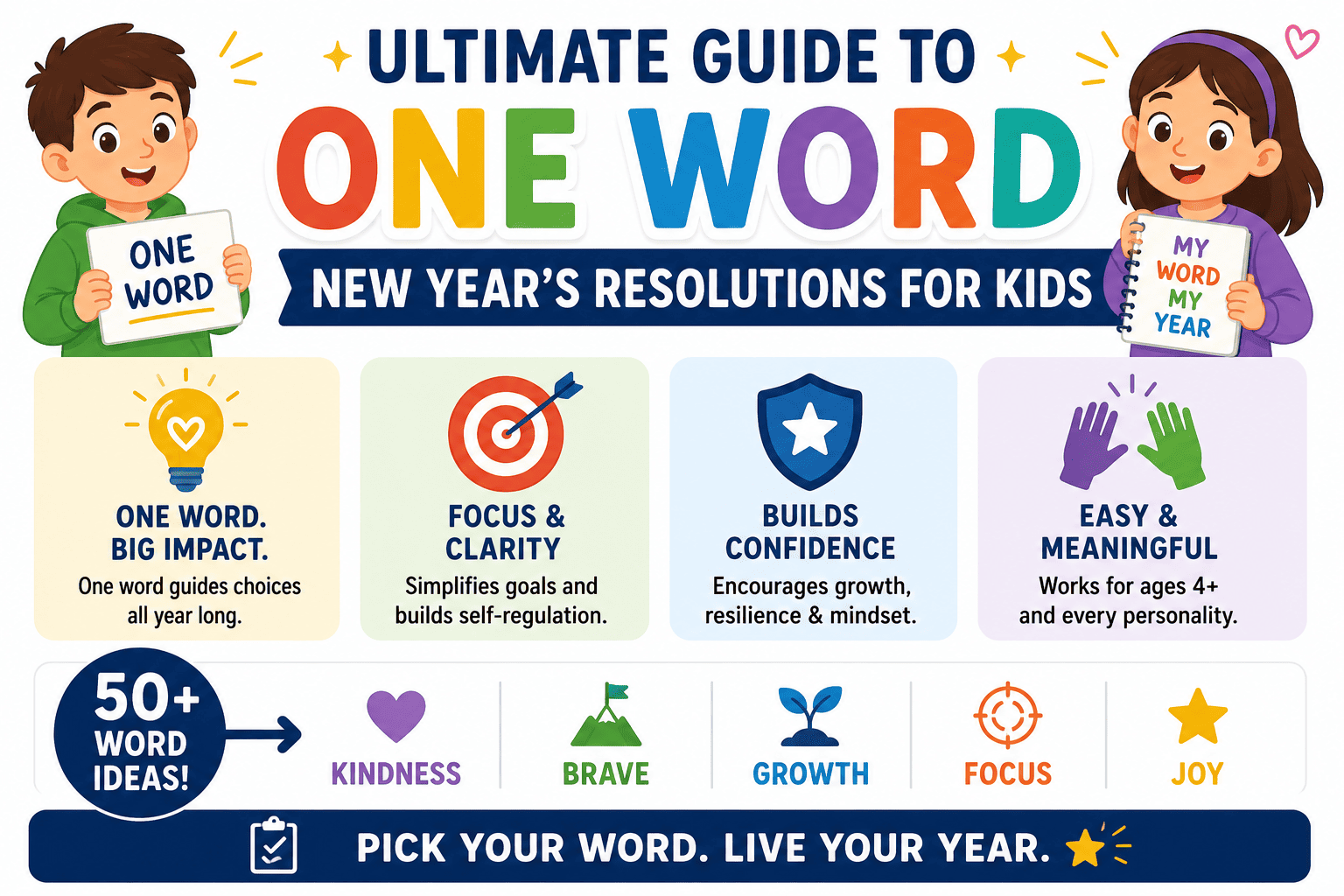
Traditional New Year’s resolutions often overwhelm children with multiple goals they forget by February. The one word resolution approach offers a simpler, more powerful alternative. Instead of long lists, children choose a single word that becomes their guide for the entire year, a word that helps them make decisions, grow in character, and build confidence. This approach works because it is simple, flexible, positive, and identity-building.
One word, one year, infinite growth. A single word like “brave” or “organized” guides decisions naturally across home, school, and friendships. The word becomes a north star, not a rigid rule, but a gentle guide toward who the child wants to become.
Children’s brains develop executive function skills gradually. A single word reduces overwhelm, flexes with changing circumstances, focuses on positive identity (“who I want to become”), teaches root-cause thinking, and connects to identity development during crucial years. This approach builds self-regulation, decision-making skills, and resilience.
✔ Reduces cognitive load → children can focus on one concept
✔ Builds identity → connects to “who I want to become”
✔ Teaches metacognition → “How does my word guide me today?”
✔ Creates narrative → a powerful story children can tell about themselves
Ask guiding questions: What are you most proud of? What was hardest? What do you wish had been different? For younger kids, use photos and concrete memories to help them recall and reflect.
Help children imagine their ideal year ahead. Use guided imagery: “Close your eyes, it’s next December. What do you see yourself doing? How do you feel?” This builds excitement and clarity.
Create a visual brainstorm on paper or whiteboard. Use the word lists above as inspiration, but let children generate their own ideas too. The more ownership, the more commitment.
Help children articulate why each finalist appeals to them. Test each word across life domains: “How would this work at home? At school? With friends?” This builds metacognitive skills.
Celebrate the choice with a ritual, sign a commitment card, create artwork, or share formally with family. The ceremony increases buy-in and creates a meaningful memory.
If a child is stuck, ask: “What’s one thing you wish you were better at?” or “What kind of person do you want to be when you grow up?” These questions often reveal the perfect word.
One word resolutions build character, confidence, and self-awareness. When children choose their own word, reflect on progress, and receive supportive acknowledgment, they learn that they have the power to become who they want to be. This is not about perfection, it’s about growth.
| Age Range | Approach | Example Words |
|---|---|---|
| Preschool (4–6) | Adult guidance, concrete words, pictures, brief check-ins, immediate positive feedback | Happy, kind, helper, share, try |
| Early Elementary (7–9) | More abstract concepts, brief journaling, peer connections, sticker charts | Brave, curious, respectful, focus, organized |
| Upper Elementary (10–12) | Nuanced words, written reflection, identity connections, peer accountability | Integrity, determination, compassionate, balance, persistent |
✔ Free printable word cards for younger children
✔ Reflection journal templates for older kids
✔ Family activity guides for implementing together
✔ Classroom display ideas for teachers
The beauty of one word resolutions lies in their simplicity and power. A single word like kindness, brave, or focus becomes a north star that guides children’s decisions naturally. When kids choose their own word, reflect on progress, and receive supportive acknowledgment, they learn that they have the power to become who they want to be. This New Year, skip the overwhelming lists. Help the children in your life choose one word, and watch how that single word expands into a year of meaningful transformation.
The best gift you can give a child is the confidence to grow. One word is all it takes to start the journey. Trust the process, celebrate the small wins, and watch your child’s one word become a story of growth they’ll remember forever.
Explore more parenting and teaching resources, including vocabulary building, communication skills, and growth mindset activities.
Browse All Guides → Free Learning ToolsContinue supporting children’s growth with our guides on Positive Adjectives for Kids, Storytelling for Children, and English Speaking for Kids.

Belekar Sir is the founder and lead instructor at Belekar Sir’s Academy, a trusted name in English language education. With over a decade of teaching experience, he has helped thousands of students—from beginners to advanced learners—develop fluency, confidence, and real-world communication skills. Known for his practical teaching style and deep understanding of learner needs, Belekar Sir is passionate about making English accessible and empowering for everyone. When he’s not teaching, he’s creating resources and guides to support learners on their journey to mastering spoken English.