Yes, reading English words becomes easy when you break them into syllables, recognize common letter patterns (like sh, ch, ea, tion), learn sight vocabulary, and practice reading aloud daily. Use the 5-step decoding method and leverage technology like text-to-speech and subtitles to accelerate fluency. With consistent practice using these strategies, most learners see noticeable improvement within 3 to 6 months.
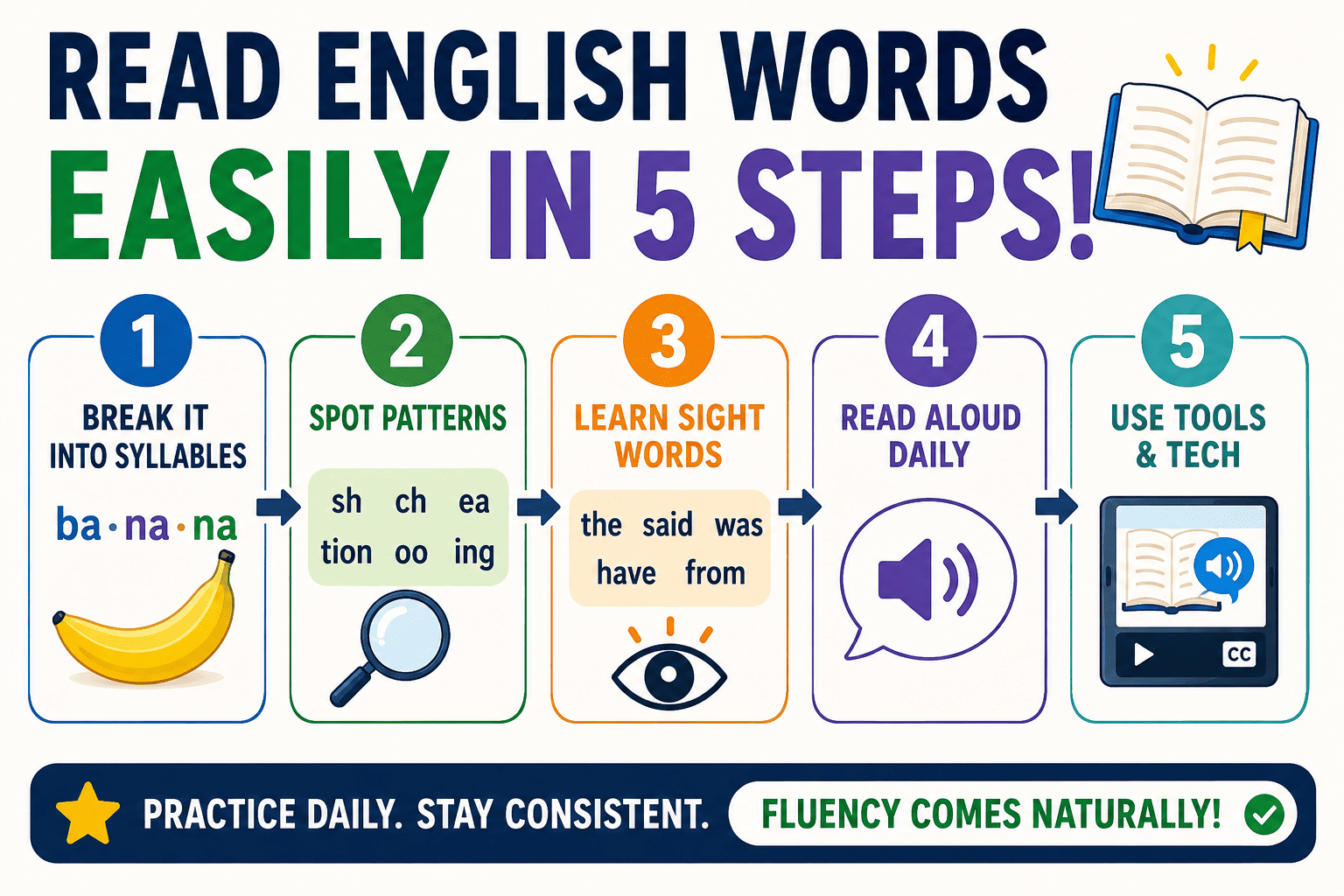
English spelling can seem chaotic, just look at rough, through, though, thought, but behind the chaos lie consistent patterns. Understanding three core elements transforms frustration into fluency. Whether you’re a beginner or intermediate learner, these proven strategies will help you decode unfamiliar words and build reading confidence quickly.
Every English word can be decoded using three simple principles: Syllables (vowel-centered chunks), Letter Patterns (common combinations like sh, ch, ea), and Word Stress (which syllable gets emphasis). Master these three, and you’ll read any word with confidence.
Break words into vowel-centered chunks. in-com-pre-hen-si-ble becomes six simple pieces. Each syllable has one vowel sound.
Digraphs (sh, ch, th), vowel teams (ea, oa), common endings (-tion, -sion) are your shortcut to pronunciation.
English rhythm matters. HAPpy vs. reCORD. Stress the right syllable and words sound natural instantly.
| Pattern Type | Examples | Typical Sound |
|---|---|---|
| Consonant digraphs | sh, ch, th, wh | /ʃ/, /tʃ/, /θ/, /w/ |
| Vowel teams | ea (dream), oa (boat), ai (rain) | long vowel sounds |
| Silent letters | kn, wr, mb, gh | knee, write, lamb, though |
| Common endings | -tion, -sion, -ous, -ment | nation, vision, serious, payment |
When you see a new word, look for patterns you already know. If you know “nation,” you can decode “international” by spotting the familiar “tion” chunk.
Step 1: 5 syllables (un-be-liev-a-ble) • Step 2: un / be / liev / a / ble • Step 3: “liev” sounds like “leave” • Step 4: Related to “believe” • Step 5: Confirm with audio: /ˌʌn.bɪˈliː.və.bəl/
Sight words are words you recognize instantly, without sounding out. The 100 most common English words make up about 50% of all written text. Master them and reading speed doubles.
| Daily Routine | Action |
|---|---|
| Learn 5-10 new words | Use flashcards with definitions and example sentences. |
| Review 20-30 old words | Spaced repetition (Anki, Quizlet). |
| Read in context | Find sentences with new sight words. |
| Write your own sentences | Reinforces memory and usage. |
Reading aloud engages sight, speech, and hearing simultaneously, creating stronger neural connections. Start with short passages, record yourself, compare with native audio, and gradually increase speed.
Choose a paragraph at your reading level. Read slowly and clearly, then repeat 3 times aiming for smoother, more natural rhythm. Use your phone’s voice recorder to track improvement weekly.
You don’t need a dictionary for every unknown word. Read the full sentence. Surrounding words often reveal meaning through examples, contrasts, or logical inference.
“The arboretum, a garden of trees, was peaceful.” (the phrase defines it)
“Unlike his gregarious brother, he was quiet.” (gregarious means outgoing)
“Edible plants such as spinach, kale, and lettuce…” (edible = safe to eat)
| Tool Type | How It Helps | Examples |
|---|---|---|
| Dictionary apps | Audio pronunciation, IPA, examples | Cambridge Dictionary, Merriam-Webster |
| Text-to-speech | Hear while reading (simultaneous reading) | NaturalReader, Edge Read Aloud |
| English subtitles | Connect written and spoken words naturally | Netflix, YouTube with captions |
| Pronunciation apps | AI feedback on accuracy | Elsa Speak, Sounds: Pronunciation |
Watch your favorite show with English audio + English subtitles. Pause when you see an unfamiliar word, repeat the sentence aloud. Entertainment + learning = effortless practice.
Focus on high-frequency patterns, learn exceptions gradually, and always verify pronunciation with audio. A few seconds of checking prevents months of incorrect habits.
Try timed reading: read a passage for 1 minute, count words, then reread trying to increase the count. This pushes your brain toward automatic word recognition.
Week 1: 80 words/minute → Week 6: 120 words/minute. Small daily gains add up. Don’t aim for perfection; aim for persistence.
Every fluent English reader once struggled with unpredictable spelling and slow decoding. The difference is not talent, it’s strategy plus consistency. Break words into syllables, master sight vocabulary, read aloud, and use technology as your ally. Choose one technique from this guide and practice it daily for two weeks. Then add another. Step by step, you will transform reading from a labor into an effortless, enjoyable skill.
Try these strategies for two weeks and watch your reading confidence soar. Explore more fluency guides and tools at Belekar Sir’s Academy.
Explore All Articles → Try Our ToolsContinue your learning journey with our guides on reading and creativity, does reading improve IQ, and why reading is important for kids.
Every fluent reader was once a beginner. Start today, and tomorrow you’ll read with confidence.

Belekar Sir is the founder and lead instructor at Belekar Sir’s Academy, a trusted name in English language education. With over a decade of teaching experience, he has helped thousands of students—from beginners to advanced learners—develop fluency, confidence, and real-world communication skills. Known for his practical teaching style and deep understanding of learner needs, Belekar Sir is passionate about making English accessible and empowering for everyone. When he’s not teaching, he’s creating resources and guides to support learners on their journey to mastering spoken English.