The timeless classic A Charlie Brown Christmas has captured hearts for generations, teaching valuable lessons about commercialism, friendship, and the true meaning of the holiday season. For educators seeking meaningful ways to celebrate the holidays while maintaining educational value, Charlie Brown Christmas classroom activities offer the perfect solution. This beloved Peanuts special provides rich opportunities for cross curricular learning that engages students from kindergarten through middle school.
Whether you are planning activities for the final days before winter break or creating a comprehensive holiday unit study, these Charlie Brown themed activities blend entertainment with education. From literacy skills and math practice to character education and arts integration, this guide provides everything you need to create memorable learning experiences centered around Charlie Brown and the Peanuts gang.
Why Use Charlie Brown Christmas in the Classroom
Educational Benefits
A Charlie Brown Christmas serves as an excellent teaching tool for multiple reasons. The 25 minute runtime makes it manageable for classroom viewing, while the straightforward plot helps students practice comprehension skills. The special addresses themes of depression, commercialism, friendship, and finding meaning in simplicity, providing rich material for discussion and critical thinking.
The story also offers natural connections to multiple subject areas. Students can explore the mathematics of the 1960s era when calculating inflation, analyze the jazz soundtrack for music appreciation, or examine the historical context of television in the mid twentieth century. The character driven narrative allows for deep dives into personality traits, conflict resolution, and emotional intelligence.
Key Themes to Explore
The special presents several important themes worth exploring with students. Charlie Brown struggles with holiday depression and feeling like an outsider, topics that resonate with many students. The commercialization of Christmas versus its true meaning creates opportunities for discussions about values and consumerism. The famous Linus speech from Luke 2 introduces religious literacy in an age appropriate way, while the transformation of the sad little tree demonstrates how kindness and community can create beauty from humble beginnings.
Students can examine how friendship dynamics play out among the Peanuts characters, noting both positive and negative interactions. The special also showcases persistence when Charlie Brown continues directing the play despite mockery, teaching students about believing in yourself even when others doubt you.
Pre Viewing Activities
Setting the Stage
Before watching the special, build excitement and activate prior knowledge with these preparation activities. Create a KWL chart where students list what they know about Charlie Brown, what they want to learn, and later what they learned. Display images of the main characters and have students make predictions about their personalities based on appearance.
Introduce vocabulary that appears in the special such as commercialism, psychiatry, pageant, and aluminum. Have students create illustrated vocabulary cards they can reference during viewing. You might also share brief background information about Charles Schulz and the creation of the Peanuts comic strip, helping students understand the cultural significance of this special.
Character Introduction Activities
Help students familiarize themselves with the Peanuts gang before viewing. Create character cards featuring Charlie Brown, Snoopy, Linus, Lucy, Sally, Schroeder, and Woodstock. Students can sort characters by traits, make predictions about relationships, or create comparison charts. A character matching game where students pair names with personality descriptions builds anticipation for the viewing.
Consider having students research one character and present a brief biography to classmates. This activity works well for older elementary students who can handle independent research. Younger students might enjoy a show and tell where they bring in Peanuts themed items from home and explain why they chose that particular character or object.
During Viewing Activities
Active Viewing Guides
Keep students engaged during the movie with structured viewing guides. Create fill in the blank worksheets where students complete sentences about plot points, character actions, or memorable quotes. Multiple choice questions can check comprehension of key scenes, while short answer prompts encourage students to think critically about character motivations.
Design a bingo card with events from the special, allowing students to mark off squares as scenes unfold. This game format maintains engagement without requiring writing during the viewing. For older students, provide a two column note sheet where they list examples of commercialism in one column and examples of true holiday spirit in the other.
Observation Challenges
Challenge students to watch for specific elements throughout the special. Ask them to count how many times they see Christmas trees, note every song that plays, or list all the dance moves performed during the famous party scene. Students might track how many times Charlie Brown expresses sadness versus happiness, creating a simple data set for later math activities.
Create scavenger hunt sheets with items to spot such as Snoopy decorating his doghouse, Lucy pulling away the football, or Linus carrying his blanket. Students can work in pairs to find and check off items, promoting collaborative viewing. For advanced students, ask them to identify the turning point in the story where Charlie Brown shifts from sadness to understanding.
Literacy Activities
Reading Comprehension Exercises
| Activity Type | Description | Grade Level |
| Sequencing Cards | Students arrange 8-12 scene cards in story order | K-2 |
| Plot Mountain | Map exposition, rising action, climax, falling action, resolution | 3-5 |
| Character Analysis | Create detailed profiles examining motivations and growth | 4-8 |
| Theme Identification | Identify and support main themes with evidence | 5-8 |
| Comparative Reading | Compare book version to movie version | 2-5 |
Writing Prompts
Engage students with creative and analytical writing activities connected to the special. Ask students to write a letter from Charlie Brown to Lucy explaining why he feels depressed about Christmas. Have them compose a newspaper article reporting on the school Christmas play, including interviews with cast members. Students can create an alternate ending where Charlie Brown chooses a different tree or where the kids react differently to his choice.
For younger students, sentence starters help scaffold writing: I think Charlie Brown felt sad because, The best part of the story was, If I were directing the play I would, or My favorite character is because. Older students can write persuasive essays arguing whether schools should focus on commercial or spiritual aspects of holidays, using evidence from the special.
Creative writing options include composing a diary entry from any character’s perspective, writing a prequel explaining how the Christmas play was planned, or creating a sequel showing what happens after the final scene. Students might write poetry inspired by Linus speech, craft comic strips featuring the Peanuts gang, or develop scripts for a deleted scene.
Vocabulary Development
Extract rich vocabulary from the special for word study activities. Words like commercialism, depressed, psychiatrist, pageant, aluminum, ridiculous, and peculiar offer great learning opportunities. Create vocabulary squares where students write the word, definition, synonyms, antonyms, and use it in a sentence with an illustration.
Play vocabulary charades where students act out words without speaking while classmates guess. Design crossword puzzles or word searches incorporating special vocabulary. Have students create vocabulary posters featuring the word in creative lettering with visual representations of meaning. A vocabulary parade allows students to dress as their word and explain its meaning to other classes.
Math Activities
Christmas Tree Measurement
Transform the famous Charlie Brown tree into math lessons. Students can estimate and measure the height of a small branch you bring to class, comparing estimates to actual measurements. Create word problems based on the tree: If Charlie Brown’s tree costs 50 cents and a fancy aluminum tree costs 20 dollars, how much more does the aluminum tree cost? Calculate percentage differences between tree prices.
Older students can work with ratios, determining if they had 100 dollars to spend on holiday decorations, what percentage they would spend on a tree versus other items. Create scale drawings of trees with different measurements, or have students calculate the area of wrapping paper needed to wrap various sized gifts shown in the special.
Data Collection and Graphing
Watch the special while collecting data for graphing activities. Count how many times each character speaks, then create bar graphs comparing dialogue amounts. Track the duration of different scenes using stopwatches, creating pie charts showing what percentage of the special focuses on different settings.
Students can survey classmates about favorite characters, preferred Christmas trees, or most memorable scenes, then display results in various graph types. Create pictographs using Christmas tree symbols to represent data, with each symbol representing multiple data points. Compare and contrast data sets using Venn diagrams, such as characters who dance versus those who don’t, or outdoor scenes versus indoor scenes.
Holiday Shopping Math
Lucy charges five cents for psychiatric help in the special. Create word problems around this: If Lucy helps 20 students, how much money does she earn? If she raises her price to 10 cents, how much would she earn from the same number of students? Students can create their own price lists for holiday items and write word problems for partners to solve.
Calculate elapsed time problems based on the special’s timeline. If the Christmas play is in two weeks and they practice 30 minutes per day, how many total minutes will they practice? Design comparison shopping activities where students determine the best value between different types of Christmas trees or decorations, calculating unit prices and percentages saved.
Science and STEM Challenges
Christmas Tree Science
Explore the science behind Christmas trees. Discuss why evergreen trees stay green in winter while deciduous trees lose leaves. Examine real pine needles under magnifiers, documenting observations with drawings and descriptions. Research different evergreen species, creating identification guides with samples.
Challenge students to design and build the strongest possible structure to hold a Christmas ornament using only popsicle sticks, string, and tape. Test structures by adding increasing weight until they collapse, recording data and determining which design was most successful. Discuss concepts of balance, center of gravity, and structural engineering.
Light and Electricity Exploration
Snoopy decorates his doghouse with colorful lights, providing opportunities to explore electricity. Build simple circuits using batteries, wires, and small bulbs. Students can diagram circuit paths and test conductors versus insulators. Create parallel and series circuits, observing differences in brightness and function.
Investigate the science of light and color. Use prisms to separate white light into spectrum colors, discussing how this relates to colored Christmas lights. Create color mixing experiments with transparent colored filters. Students might design their own lighting display for a miniature doghouse, planning the circuit and explaining their design choices.
Engineering Challenges
Present engineering design challenges inspired by the special. Task students with building the tallest free standing tower using only paper and tape, decorating it as a Christmas tree. Challenge groups to create a device that will safely deliver an ornament from a tabletop to the floor without breaking. Design and construct a stage set for the Christmas play using recycled materials.
Students can engineer a pulley system to lift decorations onto a tree, or create a catapult that launches cotton ball snowballs into a target area. Each challenge should include the engineering design process: ask, imagine, plan, create, test, and improve. Students document their process with photographs and written reflections.
Arts and Crafts Projects
Creating Charlie Brown Trees
The iconic scraggly tree offers fantastic craft opportunities. Students can create their own versions using various materials. Gather small bare branches from your school yard, place them in clay or play dough bases, and add a single red ornament. Students might paint branches brown and add green fingerprint pine needles, leaving most of the tree bare.
Construct three dimensional trees from brown construction paper cones with minimal decorations. Create tissue paper collage trees on cardstock, using torn pieces to show the sparse, sad nature of Charlie Brown’s choice. Older students can sketch or paint their interpretation of the tree, focusing on artistic techniques like shading and perspective.
Peanuts Character Art
Students love recreating beloved characters. Provide step by step drawing tutorials for Charlie Brown, Snoopy, Linus, and Lucy. Start with basic shapes and gradually add details. Students can draw characters performing their famous dance moves, create comic strips featuring the Peanuts gang, or design new outfits for characters.
Paper plate crafts work wonderfully for younger students. Transform plates into character faces using construction paper, markers, and other craft supplies. Create character puppets using paper bags, popsicle sticks, or socks. Students can use these puppets to retell the story or create new Peanuts adventures.
Ornament Making
Connect to the special’s ornament theme by creating handmade decorations. Students can design salt dough ornaments shaped like characters, trees, or other story elements. Paint clear glass or plastic ornaments with scenes from the special. Create paper mache ornaments decorated with Peanuts imagery.
Make cinnamon scented ornaments by mixing cinnamon, applesauce, and glue, cutting shapes with cookie cutters. String popcorn and cranberry garlands like old fashioned decorations. Design personalized ornaments incorporating student photos with Peanuts characters. Each ornament can include the year and student signature, creating lasting keepsakes.
Music and Movement Activities
Exploring the Jazz Soundtrack
The Vince Guaraldi jazz score is instantly recognizable. Introduce students to jazz music through this accessible entry point. Listen to individual songs from the soundtrack, discussing instruments they hear. Students can identify piano, drums, bass, and other jazz instruments. Compare jazz to other musical genres students know.
Research Vince Guaraldi and his musical career. Students can create presentations about his life and contributions to music. Listen to other Guaraldi compositions beyond the Charlie Brown Christmas soundtrack. Have students compose their own simple melodies on xylophones or keyboards, attempting to capture a jazz feeling.
Dance Activities
The famous dancing scene provides perfect movement opportunities. Watch the dance scene multiple times, assigning each student or small group a different character’s moves to learn. Practice individual dances, then perform them simultaneously to recreate the party scene. Video record your class version to compare with the original.
Create a dance freeze game where music from the special plays and students dance in character. When the music stops, everyone freezes in a dance pose. Lead students in creating their own Peanuts inspired choreography to different holiday songs. This activity builds confidence, coordination, and creative expression while connecting to the special.
Sing Along Activities
The special features classic Christmas carols. Print lyrics to songs like Hark the Herald Angels Sing and practice as a class. Discuss the meaning behind lyrics, particularly in relation to Linus speech about the true Christmas story. Students can create illustrated lyric books, drawing scenes that match different verses.
Compare different recorded versions of Christmas carols featured in the special. How do arrangements differ? Which instruments are used? Students rate their favorite versions and explain their choices. Advanced students might try composing simple harmonies or descants for familiar carols.
Social Studies Connections
1960s Historical Context
A Charlie Brown Christmas premiered in 1965. Explore what life was like during this decade. Research television in the 1960s, discovering that most families owned only one TV with few channels. Discuss how children’s programming differed from today. Students can interview grandparents or older community members about their memories of the special’s first broadcast.
Examine toys, fashion, and popular culture from the 1960s. Compare prices then versus now, calculating inflation. Students might create timelines showing major 1960s events alongside the special’s premiere. Discuss how societal attitudes toward religion and commercialism have shifted over six decades.
Commercialism Discussion
Charlie Brown’s frustration with holiday commercialism remains relevant. Lead age appropriate discussions about advertising and consumer culture. Show students various holiday commercials, analyzing techniques used to persuade people to buy products. Students can identify emotional appeals, celebrity endorsements, or other marketing strategies.
Create Venn diagrams comparing commercial aspects of holidays with spiritual or family focused traditions. Students list ways their families celebrate that don’t involve purchasing items. Discuss the difference between wants and needs, examining which holiday items fall into each category. This activity builds critical thinking about media messages and personal values.
Comparative Holiday Traditions
Expand beyond Christmas to explore winter celebrations from various cultures. Research Hanukkah, Kwanzaa, Winter Solstice, Diwali, and other traditions. Students create presentations or posters explaining different celebrations, finding commonalities across cultures such as light, family, and generosity.
Create a classroom celebration calendar marking various December holidays. Students can share their own family traditions, promoting cultural awareness and respect. Compare tree traditions from different cultures, discovering similar customs worldwide. This comparative approach helps students appreciate diversity while recognizing universal human experiences.
Character Education Lessons
Kindness and Acceptance
The special teaches powerful lessons about accepting others. Discuss how Charlie Brown’s friends initially mock his tree choice but later recognize its beauty. Students can write about times they felt judged or when they judged others unfairly. Create kindness challenges where students commit to one kind act daily throughout December.
Role play scenarios based on the special. How could Lucy respond more kindly when Charlie Brown feels depressed? What could Violet and Patty say instead of mocking the tree? Students practice empathy by considering different perspectives and rehearsing more compassionate responses.
Dealing with Disappointment
Charlie Brown faces repeated disappointments but persists. Discuss strategies for handling setbacks and disappointment. Students share personal stories of disappointment and how they coped. Create a class book of coping strategies illustrated with examples from students’ lives and from Charlie Brown.
Practice growth mindset language by reframing negative self talk. When Charlie Brown says I always mess everything up, students can suggest alternative statements like I’m learning how to direct a play or I made a unique tree choice. This activity builds resilience and emotional regulation skills.
Finding True Meaning
Linus speech about the Christmas story helps Charlie Brown rediscover meaning. Facilitate discussions about what matters most during holidays. Students create personal definition posters answering What does the holiday season mean to me? Include words, images, and symbols representing their values.
Challenge students to identify non material aspects of holidays they treasure most. Create gratitude lists focusing on people, experiences, and feelings rather than possessions. Students might commit to focusing more on relationships and less on material goods, documenting their experiences in journals.
Party and Celebration Ideas
Charlie Brown Christmas Party
Host a class party themed around the special. Decorate with simple, understated decorations reflecting Charlie Brown’s tree aesthetic. Create a photo booth with character cutouts where students pose. Set up activity stations featuring crafts, games, and snacks inspired by the Peanuts gang.
Play pin the ornament on Charlie Brown’s tree, a themed version of pin the tail on the donkey. Organize a dance contest where students perform their best Peanuts character dances. Screen the special as the main party entertainment. Send students home with small party favors like character bookmarks or candy canes.
Classroom Treats and Snacks
Prepare simple snacks connected to the special. Make decorated cookies shaped like Charlie Brown’s tree, Snoopy, or Christmas ornaments. Serve hot chocolate with marshmallows while watching the special, creating a cozy viewing experience. Prepare popcorn for a movie theater atmosphere.
Create dirt cups desserts with chocolate pudding, crushed cookies, and a small branch cookie to represent Charlie Brown’s tree. Make red and green fruit kabobs for healthy options. Students can decorate graham cracker doghouses with icing and candy to represent Snoopy’s decorated home. Simple snacks enhance the festive atmosphere without requiring elaborate preparation.
Gift Exchange Activities
Organize a giving focused gift exchange reflecting the special’s message. Instead of purchased items, students create handmade gifts like bookmarks, friendship bracelets, or decorated picture frames. Set a spending limit of zero dollars, encouraging creativity over consumption.
Consider a giving tree activity where students provide items for families in need. Research local charities accepting donations and create a class collection drive. Students write cards to accompany donated items, spreading holiday cheer beyond your classroom. This activity teaches generosity and community responsibility.
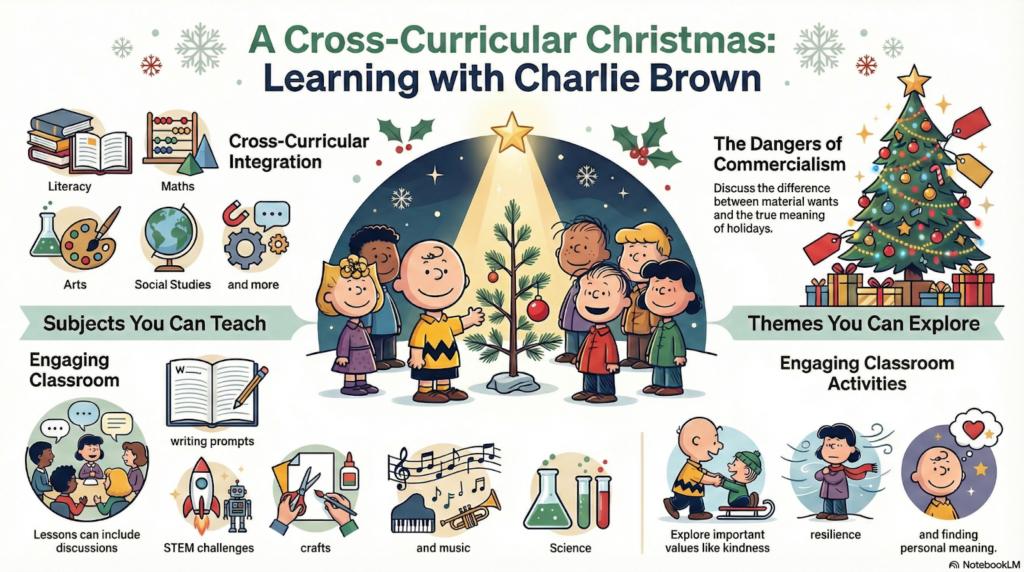
Cross Curricular Integration
Complete Unit Study Approach
Transform the special into a comprehensive unit study spanning multiple weeks. Begin with introduction activities and vocabulary preview. Watch the special early in the unit, allowing time for various follow up activities. Dedicate different days to different subject areas, ensuring balanced integration across the curriculum.
Create a unit planning chart listing activities for each subject. Include literacy work on Mondays, math on Tuesdays, science on Wednesdays, arts on Thursdays, and social studies on Fridays. This structure provides variety while maintaining focus on the central theme. Culminate the unit with a party or presentation where students showcase learning.
Assessment Options
Assess student learning through varied methods. Create a comprehensive quiz covering plot, characters, themes, and vocabulary. Assign a final project where students choose from options like creating a character scrapbook, writing a sequel story, designing a board game based on the special, or composing a song about themes.
Use rubrics for creative projects evaluating content understanding, creativity, effort, and presentation. Portfolio assessment allows students to collect work samples from throughout the unit, writing reflections on their learning. Conference with individual students to discuss favorite activities and key takeaways, assessing comprehension through conversation.
Conclusion
Charlie Brown Christmas classroom activities provide meaningful ways to celebrate the holiday season while maintaining educational rigor. This beloved special offers entry points to literacy, math, science, arts, social studies, and character education. Students engage deeply with themes of friendship, commercialism, and finding meaning in simplicity, lessons that resonate across generations.
The activities outlined in this guide accommodate various grade levels, learning styles, and classroom environments. Whether you implement a few selected activities or create a comprehensive unit study, Charlie Brown and the Peanuts gang offer rich learning opportunities. Students will remember these experiences long after the decorations come down, carrying forward lessons about kindness, authenticity, and appreciating what truly matters.
As you plan your holiday instruction, consider how these timeless characters and their meaningful story can transform your classroom into a space of joy, learning, and reflection. The magic of A Charlie Brown Christmas extends far beyond entertainment, offering powerful teaching moments wrapped in nostalgia and heart.
Frequently Asked Questions:
What age group are Charlie Brown Christmas activities appropriate for?
Activities work for kindergarten through middle school with appropriate modifications for each age group.
How long is A Charlie Brown Christmas?
The special runs approximately 25 minutes, perfect for a single class period with discussion time.
Where can I watch A Charlie Brown Christmas with my class?
The special streams on Apple TV Plus and is available on DVD for classroom use.
Do I need permission to show the movie in my classroom?
Check your school’s media licensing agreements, as educational screenings typically fall under fair use provisions.
What are the main themes in A Charlie Brown Christmas?
Key themes include commercialism versus true meaning, friendship, acceptance, depression, and finding beauty in simplicity.
Can these activities work for homeschool settings?
Absolutely, all activities adapt easily for homeschool families and small groups.
Are there religious elements in the special?
Yes, Linus recites the Christmas story from Luke 2, which teachers should preview to ensure alignment with school policies.
What materials do I need for these activities?
Most activities use basic classroom supplies like paper, markers, scissors, and craft materials already on hand.
How can I adapt activities for virtual learning?
Many activities translate to digital formats using video conferencing, shared documents, and digital creation tools.
What makes Charlie Brown Christmas good for teaching?
The special addresses relatable themes, runs short enough for classroom use, and connects to multiple subject areas naturally.

Belekar Sir is the founder and lead instructor at Belekar Sir’s Academy, a trusted name in English language education. With over a decade of teaching experience, he has helped thousands of students—from beginners to advanced learners—develop fluency, confidence, and real-world communication skills. Known for his practical teaching style and deep understanding of learner needs, Belekar Sir is passionate about making English accessible and empowering for everyone. When he’s not teaching, he’s creating resources and guides to support learners on their journey to mastering spoken English.