To improve reading culture, create inviting spaces, consistent routines, and choice-based reading. Start with 10–15 minutes daily, model reading as a role model, use varied formats (books, audiobooks, e-books), and build social reading communities. A strong reading culture transforms knowledge, empathy, and critical thinking.
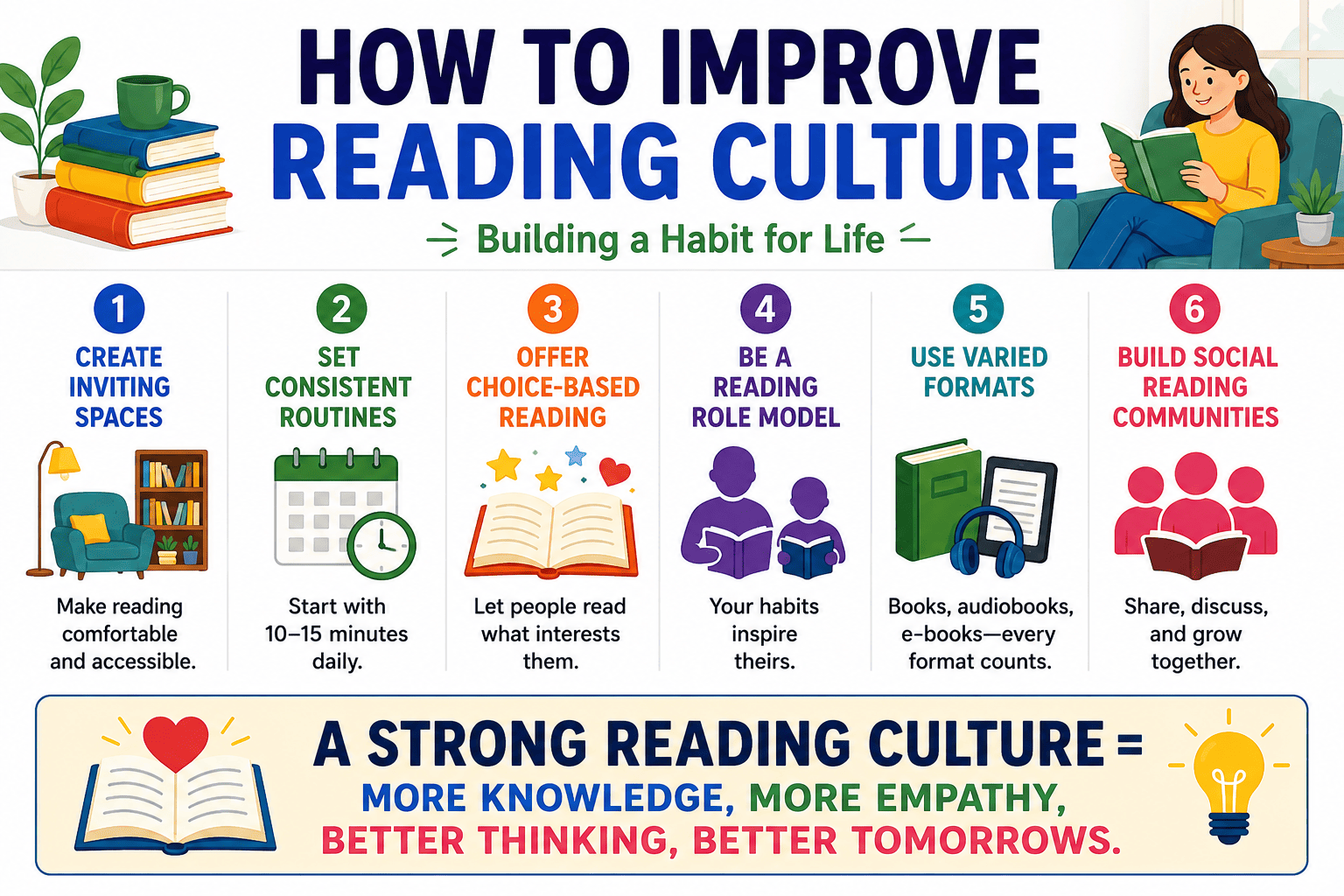
In a world dominated by quick digital bites, tweets, reels, notifications, deep, thoughtful reading often gets sidelined. Yet building a strong reading culture offers immense benefits: knowledge, empathy, creativity, critical thinking, and lifelong learning. A reading culture isn’t just about reading more books; it’s about creating an environment where reading becomes natural, enjoyable, and rewarding.
Whether you’re an individual wanting to read more, a parent nurturing reading in your family, or a teacher promoting literacy, this guide provides practical strategies to build lasting reading habits.
A reading culture goes beyond occasional reading. It means:
When these elements align, reading stops being just a skill, it becomes a lifestyle, a shared value, and a source of continuous growth.
Fuels lifelong learning, broadens horizons, builds background knowledge across subjects.
Strengthens critical thinking, empathy, and creative problem-solving abilities.
Reduces stress, offers comfort, builds emotional intelligence and resilience.
Enriches vocabulary, comprehension, and ability to see other perspectives.
Book clubs and shared reading create connection, dialogue, and belonging.
Habitual readers adapt better, learn new skills, and grow intellectually.
Designate cozy corners with good lighting, comfortable seating, and accessible bookshelves, at home, school, or community.
Daily 15–20 minute reading slots (bedtime, after dinner) make reading automatic and expected.
Autonomy fuels motivation. Let readers pick genres, formats, or topics they genuinely love.
Adults who read visibly send a powerful message: reading is valuable and enjoyable.
Book clubs, reading groups, or library events add accountability and excitement.
E-books, audiobooks, and reading apps make reading portable and accessible anywhere.
Reading challenges, certificates, or simple praise reinforce the habit positively.
Integrate reading into home, school, work, and community, make it a shared value.
| Barrier | Solution |
|---|---|
| Digital distractions & screen time | Designate screen-free zones, turn off notifications, make reading a ritual. |
| Lack of access to books | Use libraries, book-sharing groups, free e-books, or community book drives. |
| Reading feels like work | Offer choice, fun genres, comics, and social relaxed reading environments. |
| Busy schedules | Aim for 10–15 minutes daily, integrate into commute or bedtime routines. |
| No role models | Adults model reading; communities create reading events and celebrations. |
| Monotonous or mismatched material | Match reading level and interest, allow freedom to choose and explore. |
Assess existing books, designate a cozy reading spot, select 1–2 interesting books to start.
Fixed daily reading time (15–20 min). Read aloud with children; discuss stories together.
Try new genres, join a book club, start a reading challenge, visit the library.
Share reflections, celebrate milestones, involve others, integrate reading across subjects.
Refresh spaces, update book selections, encourage the next generation of readers.
Building a reading culture is a long-term investment in knowledge, empathy, and well-being. You don’t need a perfect schedule or a big library, just intention, consistency, and enjoyment. Start today.
Explore more resources on lifelong learning, literacy, and personal growth at Belekar Sir’s Academy.
Browse All Articles → Try Our ToolsBuilding a reading culture is one of the most rewarding investments you can make in yourself, your family, or your community. It transforms how people think, connect, and grow. Whether you start with 10 minutes a day, a single bookshelf, or a small reading group, every step counts.
Remember: reading culture isn’t about perfection, it’s about consistency, enjoyment, and connection. Celebrate small wins, stay curious, and keep turning pages.
Explore our guides on how to motivate kids to read, how reading improves creativity, and 3rd grade reading comprehension.

Belekar Sir is the founder and lead instructor at Belekar Sir’s Academy, a trusted name in English language education. With over a decade of teaching experience, he has helped thousands of students—from beginners to advanced learners—develop fluency, confidence, and real-world communication skills. Known for his practical teaching style and deep understanding of learner needs, Belekar Sir is passionate about making English accessible and empowering for everyone. When he’s not teaching, he’s creating resources and guides to support learners on their journey to mastering spoken English.