Improving communication skills is one of the most valuable investments you can make in your personal and professional life. Whether you want to become a more confident speaker, a more persuasive writer, a better listener, or someone who builds strong, meaningful relationships, reading the right books can accelerate your growth dramatically. Books allow you to learn directly from experts, observe different communication styles, and understand how effective communication works in the real world.
Below is an expanded and highly detailed guide to the best books for improving communication skills, along with key lessons, practical examples, and a step-by-step method to apply what you learn.
12 Must-Read Books List For Boosting Your Communication Skills
1. Nonviolent Communication Marshall B. Rosenberg
Focus: Empathy, active listening, expressing needs and feelings clearly
Key Takeaway: Helps people speak with empathy, defuse conflict, and build mutually respectful relationships.
Rosenberg’s classic book Nonviolent Communication teaches an approach that revolves around observing without judging, recognising feelings, identifying needs, and making compassionate requests instead of demands. This is especially helpful if you struggle with misunderstandings, quick reactions, relationship tension, or difficulty expressing emotions.
Why this book matters
Nonviolent communication (NVC) helps you:
- Listen deeply without interrupting
- Respond without defensiveness
- Express your needs honestly but respectfully
- Replace arguments with calm conversations
Rosenberg includes real-life scenarios marriage disputes, workplace tension, parenting challenges which make the concepts easy to apply. It teaches that communication isn’t just about speaking clearly; it’s about being in tune with yourself and others.
2. Surrounded by Idiots – Thomas Erikson
Focus: Personality types, adapting communication
Key Takeaway: Helps you communicate better by understanding how different people think.
This book explains four color-based personality types:
- Red (direct, results-oriented)
- Blue (analytic, detail-focused)
- Green (calm, patient)
- Yellow (creative, expressive)
Why this book matters
Erikson highlights that most communication problems happen because we assume others think the same way we do. When you learn to recognize personality types:
- You avoid unnecessary conflict
- You tailor your message for clarity
- You become more persuasive
- You strengthen teamwork and friendship
For example, a “Red” personality prefers quick, straightforward communication, while a “Blue” may need data, accuracy, and time to think. Understanding these differences makes conversations smoother and more productive.
3. How to Win Friends & Influence People, Dale Carnegie
Focus: Social intelligence, persuasion, relationship-building
Key Takeaway: Teaches timeless skills to make people like you, trust you, and cooperate with you.
This classic is the foundation of modern communication. Carnegie’s principles such as showing genuine interest in others, remembering names, and making people feel important are still as relevant today as when the book was written.
What you will learn
- How to make a memorable first impression
- How to handle arguments (the secret: don’t argue)
- How to influence people without manipulation
- How to create positive emotional environments
Carnegie’s examples, many from business leaders and famous personalities, help you see how small changes in communication can create big results.
4. Crucial Conversations Patterson, Grenny & Team
Focus: High-stakes conversations, conflict resolution
Key Takeaway: Helps you stay calm, clear, and effective during difficult conversations.
Everyone faces crucial conversations discussing salary raises, addressing family issues, negotiating boundaries, clarifying misunderstandings, etc. This book teaches strategies to ensure these conversations stay productive instead of becoming emotional battles.
Why this book is powerful
It shows how to:
- Speak respectfully even under pressure
- Keep discussions safe and open
- Control emotions before they take over
- Use facts instead of accusations
If you often avoid difficult discussions or feel anxious when stakes are high, this book will strengthen your confidence.
5. Talk Like TED Carmine Gallo
Focus: Public speaking, storytelling, presentation skills
Key Takeaway: Helps you speak with passion, clarity, and confidence like world-class TED speakers.
Gallo studied hundreds of TED Talks to understand what makes them engaging. He then breaks down their techniques, storytelling, emotional connection, simplicity, and authenticity.
Key lessons
- Tell stories instead of listing facts
- Use simple language
- Speak with genuine enthusiasm
- Connect emotionally with your audience
This book is perfect for students, professionals, teachers, and anyone who wants to become a more dynamic speaker.
6. Made to Stick Chip & Dan Heath
Focus: Making ideas memorable
Key Takeaway: Teaches how to communicate ideas so they stay in people’s minds.
The Heath brothers present the SUCCESs framework:
- Simple
- Unexpected
- Concrete
- Credible
- Emotional
- Story-based
Why you should read this
Whether you’re presenting in class, pitching a business idea, teaching, or posting on social media, this book helps you craft messages that people remember and act on.
7. The Art of Communicating Thich Nhat Hanh
Focus: Mindful communication, inner peace, emotional awareness
Key Takeaway: Shows how compassionate speech and mindful listening improve relationships.
This book offers a calming approach to communication. It teaches that understanding yourself your emotions, triggers, beliefs is essential before trying to communicate with others.
What you’ll learn
- How to speak with kindness even when upset
- How to listen without interrupting or judging
- How silence can be powerful
- How mindfulness strengthens relationships
A great pick if you want a more peaceful communication style.
8. Influence: The Psychology of Persuasion Robert Cialdini
Focus: Persuasion, influence, negotiation
Key Takeaway: Explains six psychological principles that make people say “yes.”
These principles include reciprocity, scarcity, authority, consistency, liking, and social proof. Understanding them makes your communication more compelling and ethical.
Why this book matters
You’ll understand:
- Why people behave the way they do
- How to create trust
- How to persuade without manipulating
- How marketing, sales, and leadership use psychology
A must-read for marketing students, leaders, entrepreneurs, and anyone interested in human behavior.
9. On Writing Well, William Zinsser
Focus: Clear, engaging writing
Key Takeaway: Teaches how to express ideas in a clean, simple, and powerful way.
Good writing automatically improves your verbal communication because it clarifies your thoughts. Zinsser shows how to write nonfiction that is structured, precise, and engaging.
What it teaches
- Eliminating clutter
- Writing with purpose
- Improving tone and rhythm
- Revising for clarity
Whether you write essays, emails, reports, or social media captions, this book will sharpen your skills.
10. The Elements of Style Strunk & White
Focus: Grammar, structure, writing style
Key Takeaway: Provides essential tools for strong written (and spoken) communication.
This concise book explains rules of grammar, punctuation, and composition that every communicator should know. It lays the foundation for accuracy, clarity, and professionalism.
Why it’s important
Even small improvements in grammar and sentence structure can make your communication more confident and credible.
11. Thank You for Arguing, Jay Heinrichs
Focus: Rhetoric, persuasion, argumentation
Key Takeaway: Shows how to craft arguments and influence conversations logically and effectively.
Heinrichs uses classical rhetoric principles and modern examples from politics, marketing, and daily life. He explains strategies like framing, word choice, emotional appeals, and building common ground.
Who should read it
- Students
- Debaters
- Professionals
- Creators
- Anyone who wants to win arguments respectfully
12. Everyone Communicates, Few Connect John C. Maxwell
Focus: Building real connection, emotional impact
Key Takeaway: True communication isn’t just about speaking; it’s about connecting with people on a human level.
Maxwell shows how to move from surface-level communication to deeper, meaningful connections something essential for leaders, managers, teachers, and team members.
How to Read These Books Effectively (Detailed Guide)
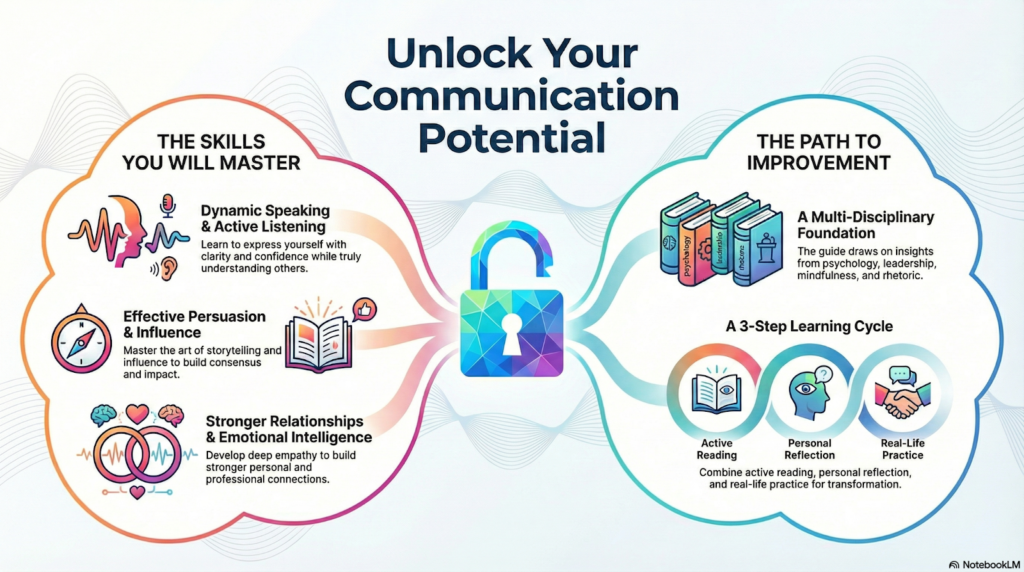
Reading these books is just the beginning. To truly transform your communication skills, you need active reading, practical application, and consistent reflection.
Below are expanded techniques to help you get the most out of every book.
1. Take Detailed Notes and Highlight Key Insights
Passive reading won’t change your skills. Active reading will.
How to take meaningful notes:
- Highlight definitions, examples, and techniques
- Write your own interpretations in the margins
- Note down quotes that inspire clarity or empathy
- Create a list of strategies to apply
When you write things down, your brain processes and stores the information more deeply.
2. Reflect and Summarise After Each Chapter
Reflection helps you internalize what you read.
Ask yourself:
- What did I learn?
- How can I use this in real life?
- What habits should I change?
- What communication mistake do I often make that this chapter addresses?
Summarising the chapter strengthens memory and makes implementation easier.
3. Practice What You Learn Immediately
Communication skills improve only through usage.
Examples:
- Practice active listening during family conversations
- Use persuasion techniques in group discussions
- Apply storytelling at work or in presentations
- Try mindful communication when you feel irritated or upset
Practical application turns knowledge into ability.
4. Observe Style, Tone, and Structure
Pay attention to:
- How authors construct sentences
- How they create flow
- How they make complex ideas simple
- How they use tone formal, friendly, persuasive
This improves your verbal and writing style automatically.
Building a Reading + Practice Routine (Expanded Guide)
To make consistent improvement, your reading habits must be simple, flexible, and sustainable.
1. Set Realistic Reading Goals
Examples:
- 15–30 minutes every morning
- One book every 2–3 weeks
- One chapter per day
Small daily progress leads to big improvements over time.
2. Mix Different Communication Areas
Communication is multi-dimensional. Rotate between:
- Empathy (NVC, Maxwell)
- Persuasion (Cialdini, Heinrichs)
- Writing (Zinsser, Strunk & White)
- Public speaking (Gallo)
- Understanding people (Erikson)
This creates a holistic improvement.
3. Keep a “Communication Journal”
Your journal can include:
- New phrases or techniques
- Example dialogues
- Lessons you applied today
- What worked and what didn’t
- Personal goals for improvement
Reviewing this journal weekly increases self-awareness.
4. Pair Reading With Real-Life Practice
Communication improves only through repetition.
Examples:
- After reading Talk Like TED, practice telling short stories
- After NVC, practice expressing needs calmly
- After Influence, try using reciprocity or social proof in conversation
- After On Writing Well, rewrite an email more concisely
5. Evaluate Your Progress
Every few weeks, ask yourself:
- Am I listening better?
- Am I expressing myself more clearly?
- Do people respond differently to me?
- Am I more confident in conversations?
Adjust your reading and practice accordingly.
Conclusion
Communication is more than just speaking it’s understanding yourself, connecting with others, adapting to different personalities, expressing ideas clearly, and listening deeply. The books listed above cover all these dimensions, offering expert guidance, practical examples, and universal principles that can transform the way you interact with people.
To truly improve your communication skills:
- Read actively and take notes
- Practice consistently
- Reflect on what you learn
- Mix different communication styles and approaches
- Keep a journal and evaluate your progress
Over time, these books will help you develop empathy, confidence, clarity, articulation, and influence. Whether you’re a student, a professional, or someone who simply wants better relationships, this reading journey will give you the tools to communicate thoughtfully and effectively.
Frequently Asked Questions
1. Why should I read books to improve my communication skills?
Books provide structured knowledge, real-life examples, and proven strategies from experts. They help you improve vocabulary, clarity, emotional intelligence, and confidence in speaking and writing.
2. Which type of communication skills can these books help with?
These books can enhance verbal communication, public speaking, listening skills, persuasion, interpersonal communication, leadership communication, and written communication.
3. Do I need to read all 12 books to see improvement?
Not necessarily. Even reading 2–3 books and applying their lessons consistently can lead to significant improvement.
4. How fast can I expect results after reading these books?
Results depend on your practice. Many readers notice improvements in conversations, confidence, and clarity within a few weeks of applying the techniques.
5. Are these communication books suitable for beginners?
Yes, most recommended books are beginner-friendly and include practical steps, examples, and exercises.
6. Can reading improve my public speaking skills?
Absolutely. Many of these books teach voice control, structuring speeches, reducing speaking anxiety, and engaging audiences effectively.
7. Are any of these books useful for workplace communication?
Yes. Several books on the list help with leadership, teamwork, negotiation, and professional writing , essential for career growth.
8. How can I apply what I read to real-life situations?
Take notes while reading, practice one technique at a time, role-play scenarios, record yourself speaking, and seek feedback to reinforce learning.
9. Should I read physical books or listen to audiobooks?
Both work well. Choose whichever format helps you stay consistent. Some people prefer physical books for note-taking, while audiobooks are great for learning on the move.
10. Can these books help non-native English speakers?
Yes. They enhance vocabulary, clarity, sentence structure, and confidence, making them excellent resources for ESL learners and professionals.

Belekar Sir is the founder and lead instructor at Belekar Sir’s Academy, a trusted name in English language education. With over a decade of teaching experience, he has helped thousands of students—from beginners to advanced learners—develop fluency, confidence, and real-world communication skills. Known for his practical teaching style and deep understanding of learner needs, Belekar Sir is passionate about making English accessible and empowering for everyone. When he’s not teaching, he’s creating resources and guides to support learners on their journey to mastering spoken English.