
In a world increasingly dominated by quick digital bites, tweets, reels, notifications, and instant messages, deep, thoughtful reading often gets sidelined. Yet building a strong reading culture where reading is regular, valued, and shared can offer immense benefits: knowledge, empathy, creativity, critical thinking, and lifelong learning. A reading culture isn’t just about reading more books; it’s about creating an environment and mindset where reading becomes a natural, enjoyable, and rewarding part of everyday life.
Whether you’re an individual wanting to read more, a parent aiming to nurture reading in your family, a teacher or school leader trying to promote reading among students, or someone interested in community literacy, this article outlines why reading culture matters, what principles support it, practical strategies to build it, and how to overcome common barriers.
What a Reading Culture Really Means
A reading culture goes beyond occasional reading; it’s a collective attitude and habit. It means:
- Accessibility — books and reading materials are available to people of all ages and backgrounds.
- Habit & Routine — reading is part of daily or weekly rhythm, not reserved only for school or when “free time comes.”
- Choice & Interest — readers have freedom to pick what they like to read — from comics to novels to magazines or nonfiction.
- Social Reinforcement & Modeling — families, peers, schools, and communities value reading; adults model reading behavior; reading is visible and shared.
- Variety & Inclusivity — reading materials of varied formats and genres to cater to different tastes, age groups, and reading levels.
- Encouragement & Celebration — reading achievements are recognized; reading is associated with joy, exploration, and reward — not just as a chore.
When these elements align, reading stops being just a skill it becomes a lifestyle, a shared value, and a source of continuous growth.
Why Reading Culture Matters — The Benefits
1. Knowledge, Curiosity & Lifelong Learning
When reading is habitual, people continually expose themselves to new ideas, stories, facts, and worldviews. This fuels curiosity, broadens horizons, and builds background knowledge. Over time, a solid reading culture nurtures self-education, awareness, and adaptability.
2. Deep Thinking, Critical Reflection & Creativity
Reading isn’t passive. Whether it’s fiction or nonfiction, stories or essays, reading invites reflection: analyzing characters, empathizing with different perspectives, understanding conflicts, comparing ideas. Such engagement strengthens critical thinking, empathy, and creativity skills invaluable for personal growth and social harmony.
3. Mental Well-Being & Emotional Growth
Books offer a retreat from the fast, noisy pace of modern life. They provide quiet, immersive experiences stimulating imagination, offering comfort or escape, and helping process emotions. Reading can reduce stress, bring calm, and build emotional intelligence.
4. Stronger Communication Skills & Empathy
Frequent readers often develop richer vocabulary, better comprehension, and deeper empathy. As readers explore different cultures, viewpoints, and life situations, they learn to see beyond themselves — improving social understanding and compassion.
5. Community, Shared Experience & Social Bonding
A reading culture can be shared among family, friends, classmates, or the community. Book clubs, reading groups, shared library visits, and storytelling sessions become social events that build connection, dialogue, and shared values.
6. Lifelong Advantage & Personal Development
Finally, a reading culture fosters lifelong learning. People who habitually read are better positioned to learn new skills, stay informed, adapt to change, and grow intellectually and emotionally over decades, not just during school years.
Given these benefits — intellectual, emotional, and social it becomes clear that cultivating a reading culture is worth the effort, at both personal and community levels.
Proven Strategies to Build and Strengthen Reading Culture
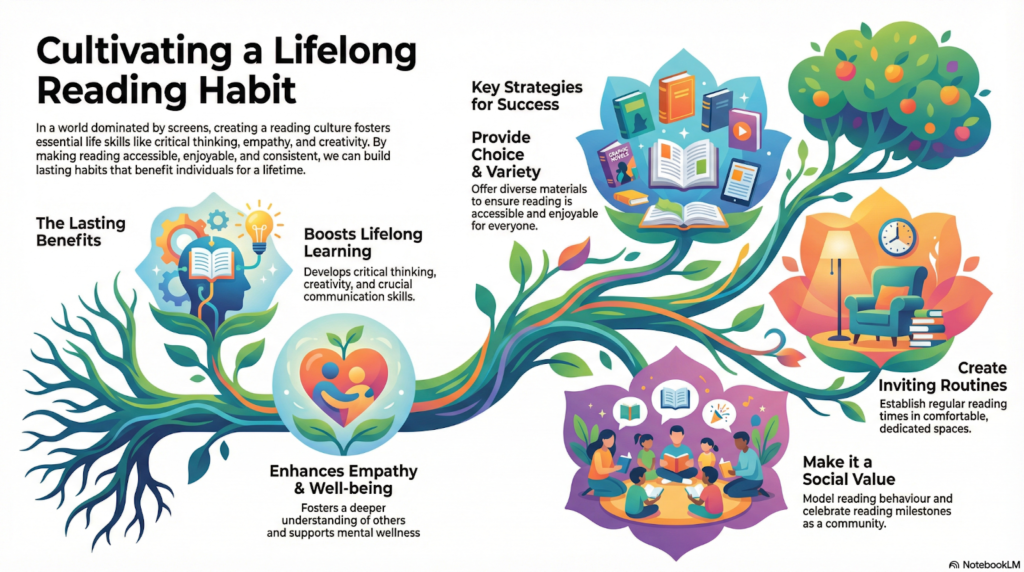
Creating a reading culture can feel challenging, especially in an era of screens and distractions. Yet with thoughtful steps, it becomes achievable. Here are practical, effective strategies for individuals, families, schools, and communities.
Create Inviting, Accessible Reading Spaces
Whether at home, school, or a community centerdesignate physical spaces that invite reading. A cozy corner with a comfortable chair and lamp, a small shelf of books, good lighting even a bean-bag under a treecan make reading feel welcoming. In schools, classrooms can have a “reading nook”; libraries or common rooms can be updated with seating, displays, and regular access. Studies show that such environments encourage reading because they make it feel like a treat or ritual, not a chore.
Establish Regular Reading Routines
Reading becomes easier when it’s part of a daily or weekly routine. For example: bedtime reading, a “silent reading period” in school, reading after dinner, or a weekend morning reading hour. Consistency helps reading become habitual. Habit-formation research suggests that regular short sessions (even 10–20 minutes) matter more than occasional long ones.
Let People Choose What They Read
Autonomy is key. If readers, especially children, pick books or reading materials that interest them (fiction, comics, magazines, science books, hobby-related topics), they’re more likely to
stick with it and enjoy the process. Limiting reading only to “assignments” or “classics” risks making it feel like work.
Lead by Example — Adults Modeling Reading Habits
Children, especially, imitate adults. When parents or teachers read regularly and visibly, they send a strong message that reading is valuable. Talking about books, sharing reading moments, and reading for pleasure: these behaviors normalize reading as a lifestyle.
Use Social & Community Mechanisms: Book Clubs, Reading Groups, Shared Reading Events
Reading doesn’t have to be solitary. Book clubs, reading groups, library circles, or even informal “reading hours” among friends can transform reading into a social, shared experience, adding accountability, excitement, discussion, and sense of belonging.
Include Variety — Formats, Genres, Media
Not everyone loves the same kind of reading. Having a mix of options, novels, comics, graphic novels, magazines, non-fiction, ebooks, and audiobooks helps meet varied tastes, learning styles, and age groups. Inclusivity in reading materials ensures more people find something they enjoy and continue reading.
Connect Reading with Real Life — Discussion, Creativity & Application
Reading becomes more meaningful when linked to real life. After reading, people can discuss, reflect, write summaries, draw, create stories, or relate content to real-world experiences. This deepens comprehension, makes reading purposeful, and reinforces the habit.
Use Technology Wisely — eBooks, Audiobooks, Reading Apps
Digital tools can support reading habits, especially in modern, busy lives. E-books, audiobooks, and reading apps make reading convenient and portable. For reluctant readers or those with visual or learning difficulties, audiobooks or digital high-contrast text can make reading more accessible.
Celebrate Reading — Milestones, Challenges, Recognition
Recognition and celebration reinforce habits. Simple efforts like reading challenges, book-reading milestones, “reader of the week,” or even informal praise for finishing a book make reading feel rewarding. This positive reinforcement builds motivation and helps sustain a reading culture.
Embed Reading Across Contexts — Home, School, Work, Community
When reading is valued not just in English class or school libraries but across all subjects and daily life as part of home routines, leisure time, and community events, it becomes a shared cultural value. Schools can integrate reading into all subjects (history, science, arts), communities can host reading events,and parents can include reading at home. This broad embedding strengthens culture and reach.
Common Barriers — and How to Overcome Them
Building a reading culture is rewarding, but not always easy. Recognizing obstacles helps plan better. Common barriers include:
- Digital Distractions & Screen Time — with smartphones, social media, and online entertainment, reading can seem dull. Solution: designate “reading times” and “screen-free zones,” turn off notifications, make reading more attractive than scrolling. Reading as ritual helps.
- Lack of Access to Books / Materials — not everyone has books or funds to purchase them. Solution: use libraries, book-sharing groups, e-books, free resources, community book drives, or second-hand books.
- Perception of Reading as Work / Boring — if reading is only associated with schoolwork, people may avoid it. Solution: offer choice, variety, fun; include comics, magazines, genres aligned with interests; make reading social and relaxed.
- Busy Schedules & Lack of Time — life is busy; reading may feel like a luxury. Solution: aim for small, consistent reading 10–15 minutes a day integrate into daily routines (commute, before bed), treat reading like brushing teeth or exercising.
- Lack of Role Models or Encouragement — if you don’t see others reading, or if home/school doesn’t value reading, motivation drops. Solution: adults model reading, communities create reading events, share reading stories, celebrate readers.
- Monotonous or Mismatched Reading Material — boring or too difficult texts discourage reading. Solution: offer variety, match reading level and interest, allow freedom to choose.
By anticipating these barriers and proactively addressing them, building a reading culture becomes far more achievable.
A Simple Action Plan to Start Building Reading Culture
You don’t need to change everything at once. Even a few small steps can start a reading culture. Here’s a simple roadmap to get started for families, schools, or individuals:
- Week 1–2: Audit & Setup
- Check what reading materials you already have (books, magazines, e-books).
- Designate a quiet, cozy reading spot (corner, chair, shelf).
- Select 1–2 books that interest you or your family members.
- Check what reading materials you already have (books, magazines, e-books).
- Week 3–4: Establish Routine
- Pick a fixed daily or every-other-day reading time (e.g., 15–20 min before bed).
- If with children: read aloud or read together; discuss stories.
- If alone: try short reading sessions, gradually build a habit.
- Pick a fixed daily or every-other-day reading time (e.g., 15–20 min before bed).
- Month 2: Expand Variety and Social Reading
- Try different genres or formats (fiction, nonfiction, magazines, comics, audiobooks).
- Join or start a book club, reading group, or reading challenge among friends, family, or community.
- Visit library or bookstore to explore more books.
- Try different genres or formats (fiction, nonfiction, magazines, comics, audiobooks).
- Month 3–6: Deepen Engagement & Create Community
- Share what you read discuss, write reflections, and recommend to peers.
- Celebrate small milestones: finishing first book, reading 5 books, trying new genre.
- Involve others: friends, siblings, classmates, encourage shared reading.
- For schools/organizations: allocate “quiet reading time,” update libraries, and integrate reading in different subjects.
- Share what you read discuss, write reflections, and recommend to peers.
- Long Term: Sustain & Evolve
- Keep reading diverse materials.
- Refresh reading spaces, update book selections.
- Use reading for learning, creativity, relaxation.
- Encourage next-generation children, peers, to continue habit.
- Keep reading diverse materials.
Final Thoughts: Reading Culture Is an Investment — For Yourself and Future Generations
Building a reading culture is not a quick fix; it’s a long-term investment in knowledge, empathy, creativity, and well-being. But its rewards are profound: informed minds, compassionate hearts, deeper thinking, richer imagination.
You don’t need a perfect schedule, a big library, or expensive books. What matters is intention, consistency, and enjoyment. Whether you’re reading for pleasure, personal growth, or community building, every page turned adds value.
If you’re reading this, that’s already a start. Pick up a book, set aside a few minutes, or share a story with someone. Little by little, day by day, you’ll be nurturing not just a habit, but a culture of reading that can last a lifetime.
Frequently Asked Questions (FAQs)
1. What does “reading culture” mean?
A reading culture refers to an environment where reading is valued, encouraged, and practiced regularly. It’s a community or home atmosphere where books are accessible, conversations about reading are common, and reading is seen as an enjoyable part of daily life.
2. Why is building a reading culture important?
A strong reading culture improves vocabulary, focus, imagination, empathy, academic performance, and lifelong learning. It also encourages curiosity and independent thinking in both children and adults.
3. How can parents encourage reading at home?
Parents can read aloud, keep books visible around the house, create a dedicated reading corner, model reading themselves, take children to libraries, and celebrate reading milestones.
4. What are simple ways to build a reading culture in classrooms?
Teachers can introduce daily silent reading, maintain diverse classroom libraries, offer student choice, use book talks, celebrate reading achievements, and integrate reading into different subjects.
5. Does digital reading count toward building a reading culture?
Yes. E-books, reading apps, and audiobooks can supplement traditional reading. As long as comprehension and engagement are present, digital media can be effective.
6. How can communities promote a reading culture?
By organizing book clubs, public reading events, library programs, book donation drives, storytelling sessions, and reading challenges for different age groups.
7. What if someone doesn’t enjoy reading?
Often, they haven’t found the right genre yet. Letting readers choose topics they’re naturally interested in comics, biographies, fantasy, science, or self-help, can transform their reading experience.
8. How much should one read daily to build a habit?
Even 10–15 minutes a day is enough to start. Consistency is more important than long reading sessions.
9. Can audiobooks help improve reading culture?
Absolutely. Audiobooks help develop listening comprehension, vocabulary, and interest in storytelling, especially for reluctant or struggling readers.
10. How long does it take to build a reading habit?
For most people, 30–60 days of consistent reading is enough to form a stable habit, though enjoyment and environment play major roles.


